Conversation Cards for Adolescents© – Helping adolescents make healthy lifestyle changes

Today’s post comes from Maryam Kebbe, a fourth year Doctoral student studying under the supervision of Dr. Geoff Ball in the Department of Pediatrics at the University of Alberta. Maryam has a passion for patient-oriented obesity research in children and plans to continue doing health research in this area after completion of her PhD.
As readers are probably well aware, often times, the first line of treatment for adolescents seeking health services for obesity management consists of behavioural changes targeting nutrition, physical and sedentary activities, and sleep habits, including an addressing possible issues of mental health.
However, health professionals often encounter a lack of adherence to a healthy behaviours by adolescents with overweight or obesity, resulting in challenges in maintaining or losing weight. This may be due to a number of factors, including difficulties in changing established habits and a lack of consideration for adolescents’ priorities in managing weight. To help with clinical consultations, both adolescents and health professionals can benefit from tools and resources that can be tailored to adolescents with obesity attempting to change their lifestyle habits.
Our team conducted a multi-phase project that included adolescents, health professionals, and researchers to develop Conversation Cards for Adolescents (CCAs), an adolescent-tailored, bilingual (English and French) clinical tool aimed at streamlining conversations and facilitating lifestyle behavior change in adolescents via collaborative goal- setting. Specifically, we completed a review of the literature (1) and a qualitative study including in-person interviews, focus groups, and patient engagement panels (2-5) from which we identified 153 factors that help, may help, or deter adolescents with obesity from adopting healthy lifestyle behaviors. Next, we asked adolescents to prioritize (online survey) and validate (telephone consultations) these factors to help refine our tool (6). The design of this tool included another three rounds of refinements with The Burke Group in collaboration with Obesity Canada.
CCAs comprise a deck of 45 cards. Each card contains an individual statement pertaining to a barrier, enabler, or potential enabler (15 statements per category) that adolescents often encounter in making and maintaining healthy lifestyle changes. These cards are organized across seven categorical suits: nutrition, physical activity, sedentary activity, sleep, mental health, relationships, and clinical factors.
CCAs are intended to be used by adolescents and health professionals and are complementary to an already existing deck of cards (Conversation Cards©) created for parents and health professionals by our research team in 2012 (7-10). Our future steps include completion of a pilot randomized controlled trial to determine the feasibility and user experience of using CCAs by adolescents with obesity and health professionals working in primary care.
Click on the links for more information on CCs and CCAs and order details.
References
- Kebbe M, Damanhoury S, Browne N, Dyson M, McHugh TL, Ball GDC. Barriers to and enablers of healthy lifestyle behaviors of adolescents with obesity: a scoping review and stakeholder consultation. Obesity Reviews, 2017; 12: 1439-1453.
- Kebbe M, Perez A, Buchholz A, Scott S, McHugh TLF, Dyson M, Ball GDC. Health care providers’ delivery of health services for obesity management in adolescents: a multi- centre, qualitative study. BMC Health Services Research, 2019; Under Review.
- Kebbe M, Perez A, Buchholz A, McHugh TLF, Scott SD, Richard C, Dyson MP, Ball GDC. Recommendations of adolescents with obesity to facilitate healthy lifestyle changes: a multi-centre, qualitative study. BMC Pediatrics, 2018; Under Review.
- Kebbe M, Perez A, Buchholz A, McHugh TLF, Scott SD, Richard C, Mohipp C, Dyson MP, Ball GDC. Barriers and enablers for adopting lifestyle behavior changes among adolescents with obesity: a multi-centre, qualitative study. PLoS ONE, 2018; 13: e0209219.
- Kebbe M, Perez A, Buchholz A, Scott SD, McHugh TLF, Richard C, Dyson MP, Ball GDC. Adolescents’ involvement in decision-making for pediatric weight management: a multi-centre qualitative study on perspectives of adolescents and health care providers. Patient Education and Counseling, 2019; In Press.
- Kebbe M, Perez A, Buchholz A, McHugh TLF, Scott SD, Richard C, Dyson MP, Ball GDC. Conversation Cards for Adolescents: a communication and behavior change tool for health care providers and adolescents with obesity. Health Services Research, 2019; Under Review.
- Kebbe M, Byrne J, Damanhoury S, Ball GDC. Following suit: using Conversation Cards for priority-setting in pediatric weight management. Journal of Nutrition Education and Behavior, 2017; 49: 588-592.
- Ball GD, Farnesi BC, Newton AS, Holt NL, Geller J, Sharma AM, Johnson ST, Matteson CL, Finegood DT. Join the conversation! The development and preliminary application of conversation cards in pediatric weight management. Journal of Nutrition Education and Behavior, 2013; 45: 476-478.
- Farnesi BC, Ball GD, Newton AS. Family-health professional relations in pediatric weight management: an integrative review. Pediatric Obesity, 2012; 7: 175-186.
- Farnesi BC, Newton AS, Holt NL, Sharma AM, Ball GD. Exploring collaboration between clinicians and parents to optimize pediatric weight management. Patient Education and Counseling, 2012; 87: 10-17.
Antipsychotic Prescriptions to Children – Too Much Too Soon?
 Following yesterday’s post on the issue of weight gain and metabolic syndrome seen in kids treated with second-generation antipsychotics (SGAs), today, I look at another paper by Silvia Alessi-Severini and colleagues from the University of Manitoba published in the same issue of the Canadian Journal of Psychiatry.
This paper examines the use of antipsychotics in children and adolescents (aged 18 years or younger) based on data collected from the administrative health databases of Manitoba Health and the Statistics Canada census between the fiscal years of 1999 and 2008.
Over these 10 years, prevalence of antipsychotic use increased with the introduction of the SGAs from 1.9 per 1000 in 1999 to 7.4 per 1000 in 2008.
The male-to-female antipsychotic usage ratio increased from 1.9 to 2.7 as the male youth population represented the fastest-growing subgroup of antipsychotic users in the entire population of Manitoba.
Notably, the paper finds that total number of prescriptions also increased significantly despite the lack of approved indications in this population.
More than 70% of antipsychotic prescriptions to children and adolescents were written by general practitioners with the most common diagnoses being attention-deficit hyperactivity disorder and conduct disorders. In fact, the use of antipsychotics in combination with methylphenidate (ritalin) increased from 13% to 43%.
Thus, it appears that there is extensive off-label use of SGAs in kids and youth in Manitoba (and likely in other provinces), a finding that is of concern not least because of the significant (30-fold increased) risk of weight gain and metabolic syndrome associated with the use of these compounds.
So, while there is no doubt that these drugs may provide important clinical benefits in kids who do need them, it is hard to imagine that this degree of off-lable prescription is indeed warranted.
Again, I would love to hear from my readers regarding experience with these medications in children and youth.
AMS
Ottawa, Ontario
Injury Patterns in Overweight and Obese High School Athletes
 In case readers are wondering whether the term “obese athlete” is an oxymoron, it is not: from my own practice I know that there are a number of high-performance athletes out there, who can have significant weight-related health problems including obstructive sleep apnea, hypertension and fatty liver disease. But that is NOT the topic of this post!
This post is about the findings of Ellen Yard and Dawn Comstock from the Centre for Injury Research and Policy, Columbus, Ohio, just published in the Journal of Physical Activity and Health, regarding the the relationship between injury pattern and BMI in US high school athletes.
This question is of considerable interest, as the authors note that about one-third of the over 7 million US high school athletes meet the BMI criteria for overweight or obesity.
The researchers analysed data from 100 nationally representative US high schools, which submitted athlete exposure (AE) and injury information during the 2005 to 08 school years via High School RIO (Reporting Information Online).
A total of 13,881 injuries during 5,627,921 athlete-exposures (2.47 injuries per 1000 AE) were reported, representing an estimated 4,339,247 injuries sustained nationally during the 2005–08 school years, for an average of 1,446,416 injuries sustained annually.
Injury rates were higher in competition (4.65 per 1000 AE) compared with practice (1.65 per 1000 AE).
Injury rates were highest in football (4.32 per 1000 AE), wrestling (2.43 per 1000 AE) and girls’ soccer (2.40 per 1000 AE). Injury rates were lowest in baseball (1.13 per 1000 AE), softball (1.19 per 1000 AE), and volleyball (1.39 per 1000 AE).
Two-thirds (61.4%) of these injuries occurred in normal weight athletes, with the exception of football, where 54% of injured athletes were overweight or obese. Specifically, in football, the majority of injured defensive tackles (65.2%), offensive tackles (64.7%), centers (63.1%), and offensive guards (58.4%) were obese.
Sport-specific overweight and obesity prevalence was also high in wrestling (31.7%), baseball (28.6%), and boys’ basketball (19.3%). Conversely, injured girls’ soccer athletes were least likely to be overweight or obese (13.5%). Other sport-specific positions with large proportions of obese athletes included first basemen in baseball (20.5%) and softball (17.2%).
The most common injury diagnoses were incomplete ligament sprains (28.2%), incomplete muscle strains (14.0%), contusions (13.2%), fractures (9.8%), and concussions (9.2%), with one in twenty (5.9%) injured athletes requiring surgery.
Compared with normal weight athletes, obese athletes sustained a larger proportion of knee injuries and their injuries were more likely to have resulted from contact with another person.
Interestingly, compared with normal weight athletes, underweight athletes sustained a larger proportion of fractures and a larger proportion of injuries resulting from ‘illegal’ activity.
With regard to the high prevalence of obesity amongst football players, the authors note:
“Although the use of BMI instead of body fat percentage may have classified some very muscular football players as overweight or obese, these findings are consistent with the previously reported epidemic of overweight and obesity in football. Football culture not only accepts but often encourages large body size, particularly among offensive and defensive linemen.“
These results point to important differences in the pattern of injuries incurred by heavier compared to normal or underweight athletes – some of which may be accounted for by the propensities of heavier athletes to participate in different types of sports than their leaner counterparts.
While this study does not support the notion that higher BMI athletes are at greater risk for injury (reported in previous studies), it may point to an increased risk in underweight athletes:
“With high school athletes being bigger and faster today than in previous years, collisions between mismatched athletes may be putting smaller, underweight athletes at greater risk for severe injury.”
What the paper does not discuss is the long-term risk of athletics for future weight gain, in overweight and obese athletes who retire due to injury or other life events. As blogged before, there seems to be no shortage of patients in my adult bariatric clinic, who report having been competitive athletes in younger years.
AMS
Edmonton, Alberta
Yard E, & Comstock D (2011). Injury Patterns by Body Mass Index in US High School Athletes. Journal of physical activity & health, 8 (2), 182-91 PMID: 21415445

Obese Teens Grow Into Severely Obese Adults
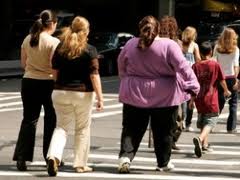 One of the most important risk factors for adult obesity is excess weight in children and youth.
But exactly how strong is this relationship?
This question was recently addressed by Natalie The and colleagues from the University of North Carolina, Chapel Hill, NC, in a paper published this month in JAMA.
In order to determine the incidence and risk of severe obesity in adulthood by adolescent weight status, The and colleagues examined data from a cohort of 8834 individuals aged 12 to 21 years enrolled in 1996 in wave II of the US National Longitudinal Study of Adolescent Health, followed up into adulthood (ages 18-27 years during wave III [2001-2002] and ages 24-33 years during wave IV [2007-2009]).
In 1996, only 79 (1.0%) of adolescents were severely obese, of which 60 (70.5%) remained severely obese in adulthood.
However, by 2009, 703 (7.9%) of the non-severely obese adolescents had also become severely obese in adulthood, with the highest rates for non-Hispanic black women.
While the adolescents, who did not become severely obese only gained around 5 BMI units over the 13-year observation period, adolescents, who became severely obese gained an average of 14 BMI units during the same time period.
Obese adolescents were 16 times more likely to develop severe obesity in young adulthood than normal-weight or overweight adolescents.
These findings are alarming but not surprising. Indeed, they are well reflected in the increasing demand for teenage bariatric surgery, a topic I blogged about just last week.
I am guessing that unless we find more effective behavioural or medical treatments for severe obesity, our surgeons will continue to have more patients than they can ever hope to cope with.
I wonder what suggestions my readers have on how best to increase awareness of this problem.
AMS
Acapulco, Mexico
The NS, Suchindran C, North KE, Popkin BM, & Gordon-Larsen P (2010). Association of adolescent obesity with risk of severe obesity in adulthood. JAMA : the journal of the American Medical Association, 304 (18), 2042-7 PMID: 21063014
Trends and Outcomes of Adolescent Bariatric Surgery
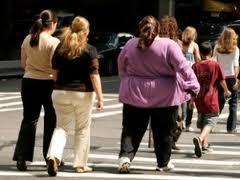 Regular readers of these pages will probably be as depressed as I am to see the increasing need for discussing bariatric surgery in kids and adolescents.
Our evident failure to make any discernible headway in preventing childhood obesity has resulted in an increasing number of youth, who are now so severely obese that bariatric surgery often appears as the best, if not the only, option.
That this problem is not negligible is supported by a recent publication by Howard Jen and colleagues from the UCLA School of Medicine, Los Angeles, California, published online in PEDIATRICS.
The researchers examined the trends and outcomes in 590 adolescents (aged 13-20 years) who underwent bariatric surgery in 86 hospitals in California between 2005 and 2007.
Although, based on population statistics, white adolescents represented only 28% of those who were overweight, they accounted for 65% of the procedures. In contrast, although 52% of the overweight adolescents were of Hispanic descent, they accounted for only 21% of procedures.
During the observation period of rates of laparoscopic adjustable gastric banding (LAGB) increased 6.9-fold from 0.3 to 1.5 per 100,000 population, whereas laparoscopic Roux-en-Y gastric bypass (LRYGB) rates decreased from 3.8 to 2.7 per 100 000 population.
Self-payers were 3.5 times more likely to undergo LAGB and only about half as likely to undergo LRYGB than privately insured adolescents.
The rate of major in-hospital complication was 1%, and no deaths were reported.
Of the patients who received LAGB, almost 5% had band revision/removal. In contrast, only around 3% of those who received LRYGB required reoperations.
The study shows that in California, white adolescent girls were disproportionately represented in bariatric surgery population.
Although LAGB has not been approved by the US Food and Drug Administration for use in children, its use has increased dramatically and is likely to be the treatment of choice in self-payers.
While the trends are clearly increasing, serious complications are fortunately rare.
Nevertheless, it will clearly take long-term observations to fully assess the efficacy, safety, and health care costs of these procedures in adolescents.
Given the limited options, the down-sides of surgery must be carefully weight against the risks of not doing surgery, which in most cases means continued weight gain with all of its problems and complications.
As in adults, bariatric surgery in kids and adolescents is neither a quick fix nor is it something anyone should rush into without careful consideration and counseling.
AMS
Edmonton, Alberta
Jen HC, Rickard DG, Shew SB, Maggard MA, Slusser WM, Dutson EP, & DeUgarte DA (2010). Trends and outcomes of adolescent bariatric surgery in California, 2005-2007. Pediatrics, 126 (4) PMID: 20855388
Watch Dr. Sharma in the News!

Listen to Dr. Sharma!