Arguments For Calling Obesity A Disease #4: Limited Response To Lifestyle Treatments
Continuing in my miniseries on why obesity (defined here , as excess or abnormal body fat that affects your health) should be considered a disease, is the simple observation that obesity responds less to lifestyle treatments than most people think.
Yes, the internet abounds with before and after pictures of people who have “conquered” obesity with diet, exercise, or both, but in reality, long-term success in “lifestyle” management of obesity is rare and far between.
Indeed, if the findings from the National Weight Control Registry have taught us anything, it is just how difficult and how much work it takes to lose weight and keep it off.
Even in the context of clinical trials conducted in highly motivated volunteers receiving more support than you would ever be able to reasonably provide in clinical practice, average weight loss at 12 – 24 months is often a modest 3-5%.
Thus, for the vast majority of people living with obesity, “lifestyle” treatment is simply not effective enough – at least not as a sustainable long-term strategy in real life.
While this may seem disappointing to many (especially, to those in the field, who have dedicated their lives to promoting “healthy” lifestyles as the solution to obesity), in reality, this is not very different from the real-life success of “lifestyle” interventions for other “lifestyle” diseases.
Thus, while there is no doubt that diet and exercise are important cornerstones for the management of diabetes or hypertension, most practitioners (and patients) will agree, that very few people with these conditions can be managed by lifestyle interventions alone.
Indeed, I would put to you that without medications, only a tiny proportion of people living with diabetes, hypertension, or dyslipidemia would be able to “control” these conditions simply by changing their lifestyles.
Not because diet and exercise are not effective for these conditions, but because diet and exercise are simply not enough.
The same is true for obesity. It is not that diet and exercise are useless – they absolutely remain a cornerstone of treatment. But, by themselves, they are simply not effective enough to control obesity in the vast majority of people who have it.
This is because, diet and exercise do not alter the biology that drives and sustains obesity. If anything, diet and exercise work against the body’s biology, which is working hard to defend body weight at all costs.
Thus, it is time we accept this reality and recognise that without pharmacological and/or surgical treatments that interfere with this innate biology, we will not be able to control obesity in the majority of patients.
Whether we like it or not, I predict that within a decade, clinical management of obesity will look no different than current management of any other chronic disease. Most patients will require both “lifestyle” and probably a combination of anti-obesity medications to control their obesity.
This does not take away from the importance of diet and exercise – as important as they are, they are simply not enough.
Despite what “lifestyle” enthusiasts will have us believe, diet and exercise are no more important (or effective) for the treatment of obesity, than they are for the treatment of hypertension, diabetes, dyslipidemia, depression, or any other condition that responds to “lifestyle” interventions.
In the end, most patients will require more effective treatments to manage their obesity and all of the comorbidities that come with it. The sooner we develop and make accessible such treatments, the sooner we can really help our patients.
@DrSharma
Edmonton, AB
The 3,500 Cal Per Pound Weight-Loss Fallacy And Why Even Experts Get This Wrong
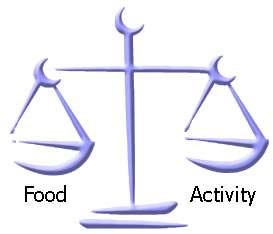 One of the most common fallacies about weight loss is that simply cutting your caloric intake by 500 Cal per day should result in a 1 lb weight loss per week.
This fallacy is based on the rathe simplistic notion that because 7 x 500 arithmetically happens to equal 3,500 Cal, which just happens to be approximately the caloric content of 1 lb of fat tissue, a reduction in weekly energy intake of 3,500 calories should lead to a 1 lb weight loss.
Thus, a recent rather unfortunate “Patient Information” page published in JAMA, states that,
“A total of 3500 calories equals 1 pound of body weight. This means if you decrease (or increase) your intake by 500 calories daily, you will lose (or gain) 1 pound per week. (500 calories per day × 7 days = 3500 calories.)”
Nothing could be further from the truth!
Now David Allison and colleagues, in a letter to the JAMA editors, points out just how nonsensical this “rule” actually is:
“For example, if a 5′6″, 30-year-old woman weighing 180 lb and consuming 2622 calories daily reduced her intake by 500 calories per day, the 3500-calorie rule would estimate her weight loss at 1 year to be almost 52 lb. At 10 years, the 3500-calorie rule would yield a negative body weight..”
Or, as I tell my patients, no one will continue losing weight till they disappear.
As regular reader of these page will appreciate, the simple reason why the 3500 Cal rule is wrong, is because the relationship between changes in caloric intake and weight loss is anything but linear. Rather, as daily caloric consumption decreases (or increases), metabolic demands adapt to compensate for this decrease (or increase), thereby limiting what happens to body weight.
This “dynamic” model of weight loss is nicely illustrated in the many validated predictors of weight loss available online (click here for an example).
Thus, based on such a model, in the above case, the actual expected weight loss at 1 year would only be around 12 lb with stabilization of a a 31-lb loss after 3 years.
Incidentally, these number, which in the above case correspond to about a 7% weight loss at one year and a 16% weight loss at 3 years are well in excess of what can generally be achieved with diet and exercise alone (those numbers being closer to 3-5% at 12-24 months).
As Allison and colleagues rightly point out, such inaccuracies (especially when propagated by reputable journals such as JAMA) mislead both health professionals and the public and do little more than promote unrealistic expectations about weight loss.
It is high time we abandoned simplistic “energy-in energy-out” models of obesity or weight management.
@DrSharma
Edmonton, AB
Call For Abstracts: Canadian Obesity Summit, Toronto, April 28-May 2, 2015
 Building on the resounding success of Kananaskis, Montreal and Vancouver, the biennial Canadian Obesity Summit is now setting its sights on Toronto.
If you have a professional interest in obesity, it’s your #1 destination for learning, sharing and networking with experts from across Canada around the world.
In 2015, the Canadian Obesity Network (CON-RCO) and the Canadian Association of Bariatric Physicians and Surgeons (CABPS) are combining resources to hold their scientific meetings under one roof.
The 4th Canadian Obesity Summit (#COS2015) will provide the latest information on obesity research, prevention and management to scientists, health care practitioners, policy makers, partner organizations and industry stakeholders working to reduce the social, mental and physical burden of obesity on Canadians.
The COS 2015 program will include plenary presentations, original scientific oral and poster presentations, interactive workshops and a large exhibit hall. Most importantly, COS 2015 will provide ample opportunity for networking and knowledge exchange for anyone with a professional interest in this field.
Abstract submission is now open – click here
Key Dates
- Notification of abstract review: January 8, 2015
- Call for late breaking abstracts open: Jan 12-30, 2015
- Notification of late breaking abstracts and handouts and slides due : Feb 27, 2015
- Early registration deadline: March 3, 2015
For exhibitor and sponsorship information – click here
To join the Canadian Obesity Network – click here
I look forward to seeing you in Toronto next year!
@DrSharma
Montreal, QC
4th Canadian Obesity student Meeting (COSM 2014)
 Over the next three days, I will be in Waterloo, Ontario, attending the 4th biennial Canadian Obesity Student Meeting (COSM 2014), a rather unique capacity building event organised by the Canadian Obesity Network’s Students and New Professionals (CON-SNP).
CON-SNP consist of an extensive network within CON, comprising of over 1000 trainees organised in about 30 chapters at universities and colleges across Canada.
Students and trainees in this network come from a wide range of backgrounds and span faculties and research interests as diverse as molecular genetics and public health, kinesiology and bariatric surgery, education and marketing, or energy metabolism and ingestive behaviour.
Over the past eight years, since the 1st COSM was hosted by laval university in Quebec, these meetings have been attended by over 600 students, most presenting their original research work, often for the first time to an audience of peers.
Indeed, it is the peer-led nature of this meeting that makes it so unique. COSM is entirely organised by CON-SNP – the students select the site, book the venues, review the abstracts, design the program, chair the sessions, and lead the discussions.
Although a few senior faculty are invited, they are largely observers, at best participating in discussions and giving the odd plenary lecture. But 85% of the program is delivered by the trainees themselves.
Apart from the sheer pleasure of sharing in the excitement of the participants, it has been particularly rewarding to follow the careers of many of the trainees who attended the first COSMs – many now themselves hold faculty positions and have trainees of their own.
As my readers are well aware, I regularly attend professional meetings around the world – none match the excitement and intensity of COSM.
I look forward to another succesful meeting as we continue to build the next generation of Canadian obesity researchers, health professionals and policy makers.
You can follow live tweets from this meeting at #COSM2014
@DrSharma
Waterloo, Ontario
Can Private Solutions Tackle Obesity?
 In my final instalment of commentaries on the right-wing Fraser Institute’s report claiming that obesity is overstated and that Governments may best stay out of trying to tackle this problem (except perhaps to provide treatments to those with more severe obesity), here are the arguments that the report puts forward favouring private solutions.
“First, there is a market test for private solutions where products and services that fail to meet their promises or customer expectations will cease to be provided. This is quite different from government interventions that do not need to meet such a test and thus may continue even if they have failed to produce the desired results in practice. Government interventions may in fact become more stringent and interventionist over time in response to their failings.”
“Second, private companies will continue to innovate and experiment in an effort to best meet the needs and desires of consumers in a cost-effective way. This is very much unlike government interventions, which are often precsriptive and constrain innovation. The result is that private organizations are more likely to find effective and less costly solutions for individuals, and are better able to adjust to changing information and knowledge, and changing consumer preferences over time.”
“Third, private initiatives do not impose a cost on the non-obese generally. This is very much unlike government initiatives that impact both the obese and the non-obese, for example through reduced options/choices, increased travel time, increased costs from taxation, increased costs of goods and services as a result of regulation, or taxpayer-funding of programs.”
While each of the above may carry some merit or are at least worth discussing, the final paragraph in this section reeks of considerable and unacceptable weight bias:
“Finally, and perhaps most critically, it is likely that most obese individuals realize they are heavy and that they may be making diet and lifestyle choices that keep them obese. They also have strong reasons to drop their excess weight including social stigma, reduced incomes, and the health risks associated with the excess weight. As Marlow and Abdukadirov note, “[the obese] hardly need the government to give them additional incentives to lose weight. People aware of their mistakes also have strong incentives to correct them.”
This rather abhorrently worded paragraph reflect all that is wrong with most public discussions on obesity – irrespective of political ideology – namely the notion that obesity is largely a matter of choice and that excess weight is something people can simply chose to drop if only they so chose by giving up their “mistakes”.
It is in this single paragraph that essentially makes the entire report largely irrelevant, as it is evident that the authors themselves struggle with fully understanding the actual nature of the problem they are trying to address.
Indeed, the whole tenor of individual “responsibility” interwoven with the language of “shame and blame” shows virtually no understanding of the real causes of the obesity epidemic or of the complex biology that people challenged by this problem face in trying to control their weight.
So, while we may quibble about whether or not the government is the best institution to tackle obesity or not, no meaningful discussion of solutions to the problem are possible unless we go beyond blaming the individuals struggling with this condition.
And certainly, while private enterprise may in some cases provide solutions, given the number of money printing weight-loss scams out there, much of this can certainly be construed as simple exploitation of a vulnerable and desperate population.
If this is what private enterprise is about – count me out.
@DrSharma
Edmonton, AB
Watch Dr. Sharma in the News!
Listen to Dr. Sharma!