The Social Function Of Fat Talk
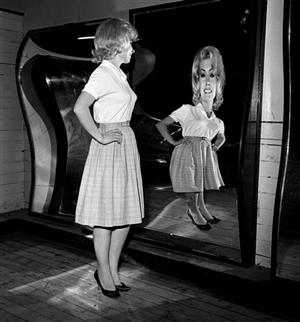 Comments about body shape, size or weight are so common that we often don’t pay attention to them. However, even a simple comment about someone’s weight or appearance, as in, “You look great – have you lost weight?”, has been shown to have significant negative consequences for the folks involved, as it endorses a thin-ideal.
Often fat talk is presented as a self-degrading comment, as in, “I feel fat” or “My thighs look too big” – not seldom from people with perfectly “normal” weight, which again endorses the negative connotations associated with fatness.
Now a study by Tegan Cruwys and colleagues published in Eating Disorders purports to demonstrate a causal link between fat talk and the correlates of disordered eating (thin-ideal internalization, body dissatisfaction, negative affect, and dieting intentions) by experimentally manipulating fat talk in existing friendship groups and measuring naturalistic expression of fat talk and its effects.
The study involved 85 women aged 17–25 who participated in friendship pairs that were randomly assigned to a condition in which their friend expressed fat talk, positive body talk, or neutral talk.
Here is how the researchers describe the experiment:
“Participants in all conditions viewed the same 20 images of female celebrities, which were diverse in terms of age, race, body shape and size. Each comment that participants read from “Friend A” was generated from a predetermined script. In the neutral talk condition, none of the 20 comments were about appearance, for example, “Such a great actress”. Eight of the neutral comments were retained in the other conditions, with the remaining 12 comments referencing appearance. In the fat talk condition, these comments explicitly valued thinness, and/or expressed body dissatisfaction. For example, “She looks great after losing all that weight” and “I should really watch what I eat more”. In the positive body talk condition, the comments emphasized body acceptance and satisfaction. For example, “It’s so great to see that she doesn’t care about her photo being taken right after having a baby”, and “Love that skirt, would look amazing on me!”. The simulated “conversation” ran for ∼10 min, following which participants immediately completed a computer-based questionnaire.”
The broad range of outcome measures included the
Body Image States Scale, the Positive and Negative Affect Scale (PANAS), the Internalization-General subscale (nine items) of the Sociocultural Attitudes Towards Appearance Scale-3 (SATAQ-3), the Dieting Intentions Scale (DIS) and a five-item questionnaire that assessed how participants felt about their friendship subsequent to the messenger task.
Existing friendship group norms for fat talk were measured using the Descriptive Norms for Pursuit of Thinness Scale.
Not only did the study show that listening to friends fat talk increased correlates of disordered eating but also that these negative effects of listening to fat talk were fully mediated by fat talk expression.
Furthermore, the study also revealed a social function of fat talk, whereby participants rated their friends more positively when they were perceived to behave consistently with group norms, either pro- or anti-fat talk.
In contrast positive body talk showed none of the negative effects of fat talk, and was considered socially acceptable regardless of existing friendship group norms.
As the authors note,
“These findings indicate that fat talk is a mechanism through which the thin ideal is transmitted between individuals. Interventions at the level of the friendship group to challenge norms and communication styles may break the link between societal risk factors and individual risk of eating disorders.”
To learn more about fat talk and its negative consequences click here
@DrSharma
Berlin, Germany
2015 Weight Bias Summit: Full Report
 Earlier this year I participated in a two-day workshop on weight bias hosted by researchers at the University of Calgary. The over 40 participants included researchers, clinicians, health administrators and a number of other stakeholders, who discussed all aspects of weight bias and discrimination.
A particular focus of the workshop, supported by the Canadian Institutes of Health Research (INMD) and co-hosted by the Canadian Obesity Network was to explore a research agenda towards finding effective ways to reduce weight bias and its negative consequences for the health and well-being of those living with obesity.
Obesity In UK Show Dogs
 As readers may be well aware, the obesity epidemic is by no means limited to humans – our pets are also affected (as, incidentally, are zoo animals).
A paper by Such and German, published in Veterinary Record, shows that a significant proportion of show dogs in the UK would be considered to have overweight or obesity.
The researchers did internet searches to identify 40 pictures per breed of 14 obese-prone dog breeds and 14 matched non-obese-probe breeds that had appeared at a major national UK show (Crufts). Of 1120 photographs initially identified, 960 were suitable for assessing body condition using a previously validated method, with all unsuitable images being from longhaired breeds.
None of the dogs (0%) were underweight, 708 (74%) were in ideal condition and 252 (26%) were overweight with pugs, basset hounds and Labrador retrievers were most likely to be in the latter category.
In contrast, standard poodles, Rhodesian ridgebacks, Hungarian vizslas and Dobermanns were least likely to be overweight.
In the discussion, the authors wonder whether or not breed standards should be redefined to be consistent with a dog in optimal body condition (read – body weight).
As someone, who could not really care less about breed standards and pedigrees (having shown dogs at dog shows myself as a kid), I find this paper of interest, as it reflects our thinking about appearances, that is by no means limited to animals.
The mental health and physical benefits of owning a dog are well-documented – whether they meet show standards or not, is probably not what determines their usefulness as (wo)man’s best friend.
@DrSharma
Edmonton, AB
Cognitive And Emotional Functioning In Binge Eating Sydrome
 As a clinician often dealing with patients presenting with binge-eating disorder (BED), I am quite aware of the often pathological cognitive and emotional relationship to food, eating, and body image presented by patients with this syndrome.
Whether or not this impairment in thinking and feeling also extends to other behavioural or emotional domains is the topic of a systematic review by Kittel and colleagues from the University of Leipzig, published in the International Journal of Eating Disorders.
The paper is based on the review of almost 60 studies and shows that, individuals with BED consistently demonstrate higher information processing biases compared to obese and normal-weight controls in the context of disorder-related stimuli (i.e., food and body cues) – in contrast, cognitive functioning in the context of neutral stimuli appear to be less affected.
With regard to emotional functioning, individuals with BED also report greater emotional deficits when compared to obese and normal-weight controls.
Thus, these findings confirm the clinical observation that patients with BED tend to have specific difficulties in cognitive and emotional functioning when it comes to food, eating or body image, however, appear to function adequately in other domains.
For clinicians these finding are relevant as they show that while people with BED may benefit from help in changing their cognitive and emotional response to food cues, such problems are indeed more often encountered in people with BED rather than in everyone living with obesity.
Screening for BED should be an essential element of workup in anyone presenting with excess weight gain.
@DrSharma
Vancouver, BC
Does Exposure Of Women To Larger Men Make Them Appear More Attractive?
 Beauty is in the eye of the beholder – but how is this eye influenced by cultural norms and familiarity?
This interesting question was the topic of an intriguing study by Eric Robinson and Paul Christiansen from the University of Liverpool, published in the International Journal of Obesity who examined whether women’s preferences for larger men can be influenced by prior exposure.
The researchers conducted a series of four studies. Studies 1 and 2 looked at how exposure to men with obesity vs. normal weight had on female attraction toward a man with overweight. The findings of these two study showed that exposure to obesity can alter visual perceptions of what normal body weights were resulting in greater attraction toward an overweight man.
Study 3 found that women who are regularly exposed to males of heavier body weights reported a greater attraction toward overweight men.
Study 4 showed that after exposure to images of men with overweight or obesity, females in an online dating study were more likely to choose to date an overweight man than a man of normal weight (Study 4).
Thus the researchers conclude that even brief exposure to men with obesity can increases female attraction toward overweight men and may affect mate choice.
However, as the researchers note, the findings are limited to single women rating caucasian males – whether exposure to women with overweight has a similar effect on male preferences remains to be studied.
Perhaps the results of this study can lead to the following dating advice – if you’re a big man, surrounding yourself with people of your size may just make you seem more attractive.
@DrSharma
Edmonton, AB
Watch Dr. Sharma in the News!
Listen to Dr. Sharma!