Tuesday, May 15, 2012

Gastric Bypass Reduces Bioavailability of Azithromycin

Bariatric surgery can profoundly affect how the body absorbs medications - this issue, however, remains largely understudied.

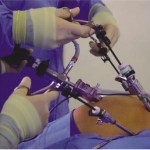
In a paper, just published in the Journal of Antimicrobial Chemotherapy, we examine the effect of gastric bypass surgery, a procedure that circumvents the upper gut on the bioavailability (absorption) of azithromycin, a widely used treatment for community-acquired infections.

We performed single-dose pharmacokinetic studies in 14 female post-gastric bypass patients and 14 sex- and body mass index (BMI)-matched controls (mean age 44 years and BMI 36.4).

Azithromycin concentrations, following the administration of two 250 mg tablets were about 30% lower in gastric bypass patients compared with controls.

This finding suggests that there may be a substantial risk for treatment failure with this antibiotic in and clinicians should consider dose modification and/or closer clinical monitoring of gastric bypass patients receiving azithromycin.

AMS
Calgary, Alberta

ResearchBlogging.orgPadwal RS, Ben-Eltriki M, Wang X, Langkaas LA, Sharma AM, Birch DW, Karmali S, & Brocks DR (2012). Effect of gastric bypass surgery on azithromycin oral bioavailability. The Journal of antimicrobial chemotherapy PMID: 22577100

.

VN:F [1.5.8_856]
Rating: 10.0/10 (1 vote cast)
VN:F [1.5.8_856]
Rating: +1 (from 1 vote)


Wednesday, May 2, 2012

Close Concerns: Obesity and CV Outcome Trials

Last week, the influential healthcare information firm Close Concerns published a rather lengthy interview regarding my take on a wide range of issues related to the future of obesity management. The interviews were conducted by Joseph Shivers, Vincent Wu, Lisa Vance, and Kelly Close, who certainly challenged and stimulated my thinking with their well-informed questions.

The following is the final excerpt from this interview published in their newsletter Closer Look:

JOSEPH: Back on the regulatory theme, what were your thoughts going into the FDA’s March advisory panel on CV outcomes studies for weight-loss drugs?

DR. SHARMA: It’s a tough one, because I understand why there is such a focus on cardiovascular outcomes when people think about obesity. But I think that probably one of the big differences between obesity and other indications like diabetes or heart disease is that, first of all, the people who get the problem are much younger than with those with the other conditions. And obesity causes so many other health problems, cardiometabolic issues are actually not the main reason why you would even need an obesity drug.

JOSEPH: That’s very interesting – it would be great if you could expand on that for us.

DR. SHARMA: I tell this to a lot of people, and especially to companies. When I have a patient in front of me, my problem is not “how do I manage their blood pressure?” or “how do I manage their cholesterol?” or “how do I manage their diabetes?” I’ve got plenty of drugs for all of those indications, and those drugs are generic, they’re cheap, and they’ve been proven efficacious. I can do all of that. That is not my problem. My problems with managing obesity are chronic pain, osteoarthritis, fatty liver disease, sleep apnea, or urinary incontinence. Those are the problems that patients actually have for which I do not have good medical treatments.

So it’s interesting to say, “Well, yes, this is the cardiometabolic risk of obesity.” But from my perspective, especially in the patients that I see who are 40 or 45 years old, nobody comes to me because they’re worried about their diabetes. They come to me because of all of these other indications for which we do not have good medical treatments, but which will benefit substantially from weight loss.

So all I really care about is that the drug is not dangerous, that it’s not killing people, that it’s right in the center in terms of hazard ratio. But if it can lead to improvements of any of these other conditions for which I do not have good treatment, I’m actually pretty happy.

JOSEPH: We focus mostly on diabetes therapies, and we often think of obesity as a sort of precursor or a risk factor for these other cardiometabolic diseases. How does that fit in with addressing these other problems?

DR. SHARMA: I give you that. But I’m not saying that that’s not an important benefit. Of course, if I can treat someone’s obesity and that reduces the risk of diabetes, or high blood pressure, whatever it is, well, that’s all a bonus. But if I don’t have the obesity drugs to do that, I can still somehow manage the diabetes and their heart disease. But for all of these other problems that I’ve mentioned that are also related to obesity, I don’t have good medical treatments.

KELLY CLOSE: Arguably, the diabetes is not necessarily being well-managed, since 44% of patients in the US alone are not at their glycemic target, according to Diabetes Care (Volume 31, Number 1, January 2008)… but we see what you mean that there are more therapies to address this, even if doctors find them hard to prescribe or patients find them challenging to adhere to.

VINCENT WU: Do you see a convergence in cardiometabolic and weight-management therapies down the road?

DR. SHARMA: Obviously, once we have an effective obesity drug that also improves cardiometabolic health in a manner comparable to the benefits we see with current antihypertensive or anti diabetic treatments, that would be great – but that could be putting up a high bar for an obesity drug. On the other hand, if the obesity drug helps get my patient off their CPAP machine or reduces their pain without lowering their blood pressure, I’d still be happy because there are other ways I can manage their blood pressure.

VINCENT: Bringing it back to the present, how would you have voted – and explained your vote – if you had been a member of the Qnexa AdCom?

DR. SHARMA: I would have voted ‘yes’ for all of the reasons I stated – acute unmet medical need, discourage use of generics, better control of prescriptions and access, manageable risk, and perhaps most importantly, chances of having a long-term outcome trial.

VINCENT: And what did you think about the outcome of the CVOT AdCom at the end of March? How would you have voted?

DR. SHARMA: I see no reason other than weight-bias and discrimination to require pre-approval CV outcome trials for anti-obesity drugs without even a theoretical (let alone a likely) risk of cardiovascular harm.

Imagine there were no effective drugs for depression, which itself is clearly associated with CV disease. Indeed, an article in Molecular Psychiatry a decade ago summed up that depression is recognized as an independent CV risk factor (Licinio et al., Mol Psychiatry 2002). In patients with a recent myocardial infarction, depression has similar implications on mortality as left ventricular dysfunction (Frasure-Smith et al., JAMA 1994). Then imagine that because of this relationship between depression and CVD, the FDA would make it fiscally impossible for drug companies to develop anti-depression drugs – leaving patients with no option but to eventually opt for electroconvulsive shock treatment. I can only imagine the families of depression and suicide victims taking to the streets and writing strong letter of protest to their representatives in Congress.

But of course not the people suffering from obesity (or their family members). After all, isn’t obesity self-inflicted? Don’t obese people simply lack self-control? Don’t they just want to look better? Aren’t they simply too dumb to heed package inserts, and don’t they need the ‘nanny state’ to look out for them? (Funnily enough, the ‘nanny state’ has popular appeal only when it comes to medications for obesity, not when it comes to the many societal factors that drive it).

As someone who is well aware of the history and potential misuse of anti-obesity drugs, I do fully agree that to date, most of the patients enrolled in the phase 2 and 3 clinical trials for investigational obesity drugs have very low short-term risk for major adverse cardiovascular events (MACE) (e.g., <0.5% per year). I agree that there should be a requirement to enrich the phase 2 and 3 clinical trials with overweight and obese individuals at higher risk for cardiovascular events (e.g., history of myocardial infarction, stroke, multiple risk factors) and to perform a meta-analysis of prospectively adjudicated events. In fact, I would limit all anti-obesity drug trials to individuals with EOSS Stage 2 obesity or higher.

AMS
Frankfurt, Germany

VN:F [1.5.8_856]
Rating: 0.0/10 (0 votes cast)
VN:F [1.5.8_856]
Rating: +1 (from 1 vote)


Tuesday, May 1, 2012

Close Concerns: Qnexa’s FDA Advisory Outcome

Last week, the influential healthcare information firm Close Concerns published a rather lengthy interview regarding my take on a wide range of issues related to the future of obesity management. The interviews were conducted by Joseph Shivers, Vincent Wu, Lisa Vance, and Kelly Close, who certainly challenged and stimulated my thinking with their well-informed questions.

The following is another excerpt from this interview published in their newsletter Closer Look:

JOSEPH SHIVERS: Thank you so much for agreeing to speak with us, Dr. Sharma. We appreciated having the chance to hear you present at the recent Qnexa advisory committee meeting in April. Some were surprised that the ultimate committee vote was so positive (20-2). What factors do you believe contributed to that vote?

DR. ARYA SHARMA: A couple special circumstances surround Qnexa’s situation. First, because it’s a combination of two drugs that are already generic and are probably already being used off-label by physicians, there is a certain urgency in approving Qnexa which may not exist for other drugs. Without a positive vote for Qnexa, people would just be using the off-label combination because both drugs are available. The problem would be that you then have virtually no control over who’s prescribing it or who’s using it. Even more importantly, you would never have a long-term efficacy or outcome or safety study because nobody would conduct it.

Also, the data, in terms of weight loss, is probably the most convincing we’ve seen from any obesity drug so far. The issues of hypertension, which you’ve seen in previous drugs, clearly do not exist for this drug. There is a very clear blood-pressure-lowering effect. As to the small increase in heart rate – nobody really knows what that means, and most cardiologists would tell you that it’s probably not very relevant, given that the drug has all these positive cardiometabolic effects.

Both circumstances – the fact that you have a very effective drug, and you have a drug that is the best composite of two drugs that are freely available as generics – make Qnexa’s situation special.

The second problem that I think the FDA advisors probably considered, is the fact that the potential teratogenic risk is limited to women of childbearing age that get pregnant. That is an important issue that needs to be considered, and you need to put steps in place to try to minimize it. But it also means that there’s no risk for men, there’s no risk for women who are not of childbearing age, and there’s probably no risk for women who are using contraception or not trying to get pregnant, and it is appropriate to use with these patients.

So, you’ve got a huge section of the indicated population for whom this drug clearly has benefits or is likely to have clear benefits, but nearly zero risk. I won’t say zero risk, but I would say that at least the possible risk of teratogenicity is not relevant to them. Again, we don’t know what that heart-rate risk is; it’s probably minimal, but we don’t know. And so when you have this, your only other alternative would have been to follow what the company had suggested initially, and just make this drug available to men and to women not of childbearing age. That would be unfair to all the women who are not planning to have kids and who are using contraception.

So it’s a unique situation for Qnexa that does not exist for other obesity drugs. If a completely new drug were to come out that is not generic, not on the market, etc., the situation will be different.

So I can, in the end, understand why the panel recommended as strongly as they did. I would not have thought it would be 20-to-2, but I would have been surprised at a negative vote.

JOSEPH: Assuming that Qnexa will be approved – which we do, based on the extended review but absence of a Complete Response Letter (see http://bit.ly/Icyo2P for our coverage) – how do you think that it will change clinical practice, and over what time period?

DR. SHARMA: Based on the experience on the previous use of drugs for obesity, there’s usually a rush for new drugs, depending on how they’re launched. Usually they launch with quite a bit of fanfare; even if the company is not generating the fanfare, the media is. Often lots of people will try the drug during the first year or so. Given the way it’s going to be dispensed, it will be a prescription, they’ll take it for a couple of weeks, and then some will realize that it’s not working for them or it’s not what they expected or they experience side effects or whatever, and then they’ll stop using it. On the other hand, with a REMS in place for Qnexa, even obtaining a first prescription may not be that easy, and this will certainly further limit uptake.

Repeat prescriptions of obesity drugs have always been rather limited because most people look at obesity drugs as drugs that you take to help you lose weight. But you have to actually keep taking them to keep the weight off. Most people will think, “You know what, I’ll just get the drug, and once I start losing weight I’ll get more active and do what it takes to keep the weight off.” That’s where everybody kids themselves, because that’s not how these drugs work. That’s not how obesity treatments work in general.

So you’ll see in the initial uptake that lots of people want to take a new ‘weight-loss’ drug. Most people that try it generally end up not sticking with it. But I do think that when prescribers and patients learn to handle this drug, and this whole notion of long-term treatment for obesity hopefully gets across, there could be a very substantial market for it. It’s not going to be the multi-billion-dollar drug overnight that most people think you may have, because that’s always been said about every new obesity drug. Then in reality it turns out that the market uptake and development tends to be a lot slower. Especially for this one, if you’re going to have all sorts of obstacles in place to prescriptions, then the uptake might be smaller and slower than you think. But I’m not saying that’s a bad thing.

JOSEPH: We know that reimbursement will ultimately be very important for Qnexa, and we assume that reduction in co-morbidities will help drive that. Can you say broadly how much you think that reimbursement will drive market dynamics, both in the US and in Canada?

DR. SHARMA: Nobody minds paying a couple of hundred bucks for a couple of months to take a drug that’s going to help them lose weight. But then if you tell them, “Once you’ve lost your 5% or 10% body weight you have to keep paying those hundred bucks a month just so that you can keep the weight off, but you’re not going to lose any more weight,” that’s when the reimbursement issue becomes relevant. People have to continue paying whatever it is that they’re paying (it’s usually a hundred or a couple of hundred bucks a month). They’re not losing more weight because they’ve achieved that maximum effect. So they wonder, “Well, why am I still taking this?” Payers traditionally have been extremely reluctant to pay for obesity drugs. My guess is that even with a new drug, you’d need more efficacy for it to be reimbursed—they are not going to be rushing to go forth on wanting to reimburse this: in Canada or the US or anywhere else.

JOSEPH: Do you think that gaining reimbursement is mainly a matter of getting the sort of long-term outcomes data that Vivus is going to be seeking in its long-term cardiovascular outcomes trial?

DR. SHARMA: You have to do a whole bunch of legitimate studies showing that you are actually getting some very real economic benefits of the treatment, and that’s where you get the attention. For example, your diabetes gets much better, or you are preventing a lot of diabetes, or you’re getting enough weight loss to really get people off sleep apnea – whatever it is – through taking this drug. One could argue that Vivus’ two-year extension trial is not large enough and not definitive, but the results all point in the right direction and, if confirmed in larger studies, such results would certainly get payors’ attention.

AMS
Edmonton, Alberta

Disclaimer: I have been a paid consultant to Vivus, the maker of Qnexa

VN:F [1.5.8_856]
Rating: 0.0/10 (0 votes cast)
VN:F [1.5.8_856]
Rating: 0 (from 0 votes)


Saturday, April 28, 2012

Hindsight: Blood Pressure-Lowering Effects of Orlistat

Alain Golay, chef du Service d'enseignement thérapeutique aux Hôpitaux Universitaires Genevois

Alain Golay, chef du Service d'enseignement thérapeutique aux Hôpitaux Universitaires Genevois

Given my growing interest in obesity related hypertension, it was not a long shot to wonder how exactly pharmacologically induced weight loss would affect blood pressure.

Thus, in a paper published in the Journal of Hypertension back in 2002, Alain Golay from the University Hospital in Geneva and I examined the effect of orlistat-induced weight loss on blood pressure and heart rate in obese patients with hypertension.

Out meta-analysis included data from five multicenter, randomized, placebo-controlled studies, conducted in Europe and the USA, of at least 12 month duration.

We specifically looked at the changes in blood pressure in participants with uncontrolled diastolic hypertension or isolated systolic hypertension.

Using an intent-to-treat analysis, we pooled data from 628 patients, whereby (as expected) the orlistat-treated participants lost significantly more body weight than placebo recipients (8.0 versus 4.0% of initial weight).

In individuals with ISH, mean systolic pressure dropped by 9.4 mmHg in the orlistat group versus 4.6 in the placebo group; In those with diastolic hypertension, blood pressure on orlistat decreased by 7.7 mmHg versus 5.6 mmHg on placebo.

To put these blood pressure changes into perspective - a mean drop in 10 and 5 mmHg in systolic and diastolic blood pressure, respectively, is generally what is seen with anti-hypertensive monotherapy - so not a bad result for a drug that helped participants achieve (and sustain) a rather modest weight loss.

As it is hard to come up with any other explanation for the drop in blood pressure with orlistat other than weight loss, this study certainly goes to show just how sensitive blood pressure is to excess weight and why weight management continues to be a recommendation in all hypertension guidelines, even if these guidelines seldom explain exactly how such a reduction in body weight can be achieved or maintained.

Nevertheless, as outlined in previous posts, hypertension continues to be one of the most common complications of excess weight - and a reduction in elevated blood pressure continues to be one of the most common benefits of even modest reductions in body weight.

According to Google Scholar, this paper has been cited 51 times.

AMS
Moose Jaw, Saskatchewan

VN:F [1.5.8_856]
Rating: 0.0/10 (0 votes cast)
VN:F [1.5.8_856]
Rating: +1 (from 1 vote)


Monday, April 2, 2012

FDA to Demand Cardiovascular Outcome Studies For All New Antidepressants

Virtually all drugs have cardiovascular side effects - indeed, it is hard to think of any drug that does not affect blood pressure or heart function in some form or fashion - think drugs for chronic pain, depression, gastrointestinal reflux, urinary incontinence, asthma, allergies, skin infections, constipation, erectile dysfunction, or even just the ‘common’ cold.

Drugs for these conditions are widely used, even by people with pre-existing or at risk for heart disease. When wrongly used, all of these drugs (like most drugs I know of), have the potential to harm.

This is why, most drugs are prescribed by doctors and dispensed by pharmacists, come with extensive package inserts listing all possible harmful effects (no matter how rare), and may include more severe warnings (black box) or restrictions on their distribution (as for scheduled drugs).

Take for e.g. depression - one of the most common mental health disorders. An estimated 1 in 10 American adults (1 in 25 adolescents) or well over 30 million take antidepressants, 60 per cent of who have taken them for two years or longer and nearly 15 per cent of who have taken them for over 10 years. In addition, the US pharmaceutical companies spend an estimated $150 million on direct-to-consumer marketing of antidepressants each year.

It turns out that Depression is associated with a considerably elevated cardiometaolic risk.

According to a paper published in Molecular Psychiatry in 2002,

“Depression is related to coronary heart disease, hypertension and stroke, and it is now recognized as an independent risk factor for cardiovascular disease. Epidemiological data indicate that depression predicts the development of coronary heart disease in otherwise healthy individuals. Several studies reported increased morbidity and mortality in depressed patients with coronary artery disease, particularly after acute myocardial infarction, independent of previous history, thereby implicating depression as a risk factor in the progression of heart disease. Depression is associated with a four-fold increase in the risk of mortality during the first 6 months following acute myocardial infarction, after controlling for covariates. The prognostic significance of depression in patients with heart disease is comparable to that of left ventricular dysfunction and prior myocardial infarction. Additionally, a number of well-designed studies have demonstrated that depressed patients have a higher risk for developing hypertension.”

Interestingly, the FDA (and its advisory committee) has no issue with approving new antidepressants without requiring companies to first prove their safety in rigorous cardiovascular outcome trials.

In 2011 the FDA approved valazodone for the treatment of depression, a dual action selective serotonin reuptake inhibitor (SSRI) and serotonin 1A receptor partial agonist (a mechanism similar to that of some anti-obesity drugs), which lists as side effects heart palpitations, fainting, and the risk of high or low blood pressure, not to mention the possibility of a potentially fatal serotonin-withdrawal syndrome when suddenly discontinuing its use.

According to Thomas Laughren, M.D., director of the Division of Psychiatry Products in the FDA’s Center for Drug Evaluation and Research, the reasons for approving valazodone includes the fact that,

“Major depressive disorder is disabling and prevents a person from functioning normally. Medications affect everyone differently, so it is important to have a variety of treatment options available to patients who suffer from depression.”

As it turns out, people with depression are fortunate!

Never mind that there are already over 20 different antidepressants on the market (all of which have potential adverse cardiometabolic side effects, including weight gain). Apparently the FDA continues to see an ‘unmet’ need for even more antidepressants and does not seem to believe that, despite their use by millions of Americans or their well-documented cardiometabolic side effects, new antidepressants would warrant the need for cardiovascular outcome trials prior to approval.

On the other hand, last week, an FDA Committee (largely the same folks I presented to a few weeks ago), advised the FDA (with a 17 to 6 vote) to require cardiovascular outcome trials for all new obesity drugs obesity even those without a theoretic risk or signal for cardiovascular harm.

This advise violates the first principle of medical care: first do no harm!

Why?

Because this advise is directly harmful to the over 70 million Americans, who suffer from obesity.

  • It is harmful because it belittles the many emotional, physical and economic health impacts of obesity.
  • It is harmful because it implies that obese people (and their doctors and/or pharmacists?) are too stupid to appropriately use anti-obesity medications and follow warnings (like people with other conditions?).
  • It is harmful because, short of bariatric surgery, we have no effective treatments for obesity.
  • It is harmful because it adds $100s of millions to the cost of developing new anti-obesity drugs.
  • It is harmful because it leaves obese people no option but to continue relying on a unscrupulous and unregulated ‘free-for-all’ weight-loss industry that adds insult to injury.

As someone, who is well aware of the history and potential misuse of anti-obesity drugs, I do fully agree with the notion that to date, most of the patients enrolled in the phase 2 and 3 clinical trials for investigational obesity drugs have very low short-term risk for major adverse cardiovascular events (MACE) (e.g., < 0.5% per year) and that there should be a requirement to enriching the phase 2 and 3 clinical trials with overweight and obese individuals at higher risk for cardiovascular events (e.g., history of myocardial infarction, stroke, multiple risk factors) and performing a meta-analysis of prospectively adjudicated events. In fact, I would limit all anti-obesity drug trials to individuals with EOSS Stage 2 obesity or higher.

However, I see no reason other than weight-bias and discrimination to require pre-approval CV outcome trials for anti-obesity drugs without even a theoretical (let alone a likely) risk of cardiovascular harm.

Imagine there were no effective drugs for depression and the FDA would make it fiscally impossible for drug companies to develop anti-depression drugs (leaving patients with no option but to eventually opt for electroconvulsive shock treatment). I can only imagine the families of depression and suicide victims taking to the streets and writing strong letter of protest to their representatives in congress.

But of course not the people suffering from obesity (or their family members) - after all isn’t obesity self-inflicted, don’t obese people simply lack self-control, don’t they just want to look better, aren’t they simply too dumb to heed package inserts, and don’t they need the ‘nanny state’ to look out for them (funnily enough, however, only when it comes to medications for obesity, not when it comes to the many societal factors that drive it).

Well then again, perhaps the difference is that people with chronic pain, depression, gastrointestinal reflux, urinary incontinence, asthma, allergies, skin infections, constipation, erectile dysfunction, or even just the ‘common’ cold have real diseases that are disabling and prevent them from functioning normally - lucky them!

Or, is it that the FDA, perhaps due to its immense capacity for compassion, cares so much more about the safety and welfare of our obese citizens, than for those less-deserving folks afflicted with other conditions?

AMS
Edmonton, Alberta

p.s. The FDA is not really expected to demand CV outcome studies for new antidepressants - only for new anti-obesity and diabetes drugs - go figure!

Disclaimer: I have received honoraria for speaking, consulting, and conducting research for the makers of anti-obesity drugs.

VN:F [1.5.8_856]
Rating: 8.0/10 (3 votes cast)
VN:F [1.5.8_856]
Rating: +8 (from 8 votes)

In The News

Diet, exercise not enough for some patients

Apr. 10, 2012 CBC – "Dr. Arya Sharma, chair of obesity research and management at the University of Alberta, applauds Williams for airing the issue publicly, saying there is a lot of stigma attached to being fat — and even more to using surgery to address the problem." Read the article

» More news articles...

Publications

"Effect of gastric bypass surgery on azithromycin oral bioavailability."

» Browse and download more journal publications...

Watch Dr. Sharma in the News!

Dr. Sharma - CTV NEWS Videos

Listen to Dr. Sharma!

Dr. Sharma - on CBC.ca

Watch Dr. Sharma on Listen Up


  • Subscribe via Email

    Enter your email address:


    Delivered by FeedBurner

  • Arya Mitra Sharma
  • I Twitter!


  • Disclaimer

    Postings on this blog represent the personal views of Dr. Arya M. Sharma. They are not representative of or endorsed by Alberta Health Services or the Weight Wise Program.
    • Recent Posts

    • Archives


    • RSS Weighty Matters

    • RSS Dr Eye Candy

    • Click for related posts

    • Disclaimer

      Medical information and privacy
      Any medical discussion on this page is intended to be of a general nature only. This page is not designed to give specific medical advice. If you have a medical problem you should consult your own physician for advice specific to your own situation.


    • Meta

    • Obesity Links

      • Average blog rating:

        9.0


      • Home | News | KOL | Media | Publications | Trainees | About
        Copyright 2008 Dr. Arya Sharma, All rights reserved.
        Blog Widget by LinkWithin