Molecular Changes During Weight Gain – Everyone Is Different
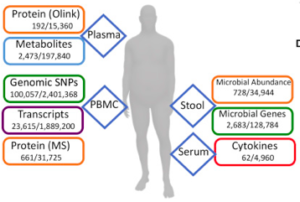 As one may well imagine, changes in body weight (up or down) can profoundly affect a vast number of hormonal and metabolic pathways.
Now, a team of researchers led by Brian Piening and colleagues, in a paper published in Cell Systems used a broad “omics” based approach to study what happens when people lose ore gain weight.
Specifically, the goal of this study was to:
(1) assemble a comprehensive map of the molecular changes in humans (in circulating blood as well as the microbiome) that occur over the course of a carefully controlled weight gain and their reversibility with weight loss; and
(2) determine whether inulin sensitive (IS) and insulin resistant (IR) individuals who are matched for degree of obesity demonstrate unique biomolecular signatures and/or pathway activation during similar weight gain.
The study included 23 carefully selected healthy participants with BMI 25–35 kg/m2, were studied. Samples were collected at baseline. They then underwent a 30-day weight gain period (average 2.8 kg), followed by an eucaloric diet for 7 days, at which point a second fasted sample of blood and stool was collected. Each participant then underwent a caloric-restricted diet under nutritionist supervision for a subsequent 60-day period designed to return each participant back to his/her initial baseline weight, at which point a third set of fasted samples of blood and stool were collected. A subset of participants returned for a follow-up sampling approximately 3 months after the end of the perturbation.Insulin resistance was assessed at baseline using a modified insulin suppression test.
The large-scale multi-omics assays performed at all time points on each participant included genomics, proteomics, metabolomics and microbiomics.
Despite some differences between the IS and IR group (particularly in differential regulation of inflammatory/immune response pathways), overall, molecular changes were dominated by inter-personal variation (i.e. changes within the same individual), which accounted for more than 90% of the observed variance in some cases (e.g., cytokines). The most striking changes with weight gain were in inflammation response pathways (despite the rather modest weight gain) and were (fortunately) reversed by weight loss.
As the authors note,
“Comparing the variation in cytokine levels between multiple baselines in a single individual versus across individuals, we observed a striking difference: for almost all cytokines, the within-individual coefficient of variation was under 20%, whereas the variation across individuals was 40%–60%. This shows that our baseline cytokine profiles are unique to the individual, a point that has significant implications for one-size-fits-all clinical cytokine assays for the detection and/or monitoring of disease.”
On the opposite side of the spectrum, proteomics and metabolomics measurements had a substantial unexplained component (30% and 35%, respectively), highlighting the presence of unaccounted factors (e.g., food, exercise, and other changing environmental factors) or a subject-specific reaction to the perturbation.
Notably, not all of the responses we observed were consistent across IR and IS participants.
“In particular, for the microbiome, we observed that the microbe A. muciniphila was weight gain responsive only in insulin-sensitive participants. The abundance of this particular microbe in IR individuals did not change across perturbations and was barely or not detectable in most IR individuals.”
Clearly, these findings highlight the fact that each individual is biochemically unique, which the authors note, makes a strong case for personalized analysis in medicine.
Perhaps more importantly for researchers, nearly all of the data are publicly available, enabling exploration of inter-omic relationships and alterations across a longitudinal perturbation, thus providing a valuable resource for the development and validation of bioinformatic tools and pipelines integrating disparate data types.
@DrSharms
Edmonton, AB
The Key To Obesity Management Lies In The Science Of Energy Homeostasis
 If there is one thing we know for sure about obesity management, it is the sad fact, that no diet, exercise, medication, not even bariatric surgery, will permanently reset the body’s tendency to defend and regain its body weight to its set point – this generally being the highest weight that has been achieved and maintained for a notable length of time.
Thus, any effective long-term treatment has to offset the complex neurobiology that will eventually doom every weight-loss attempt to “failure” (no, anecdotes don’t count!).
Just how complex and overpowering this biological system that regulates body weight is, is described in a comprehensive review by the undisputed leaders in this field (Michael Schwartz, Randy Seeley, Eric Ravussin, Rudolph Leibel and colleagues) published in Endocrine Reviews. Indeed the paper is nothing less than a “Scientific Statement” from the venerable Endocrine Society, or, in other words, these folks know what they’re talking about when it comes to the science of energy balance.
As the authors remind us,
“In its third year of existence, the Endocrine Society elected Sir Harvey Cushing as President. In his presidential address, he advocated strongly in favor of adopting the scientific method and abandoning empiricism to better inform the diagnosis and treatment of endocrine disease. In doing so, Cushing helped to usher in the modern era of endocrinology and with it, the end of organo-therapy. (In an interesting historical footnote, Cushing’s Energy Homeostasis and the Physiological Control of Body-Fat Stores presidential address was given in , the same year that insulin was discovered.)”
Over 30 pages, backed by almost 350 scientific citations, the authors outline in excruciating detail just how complex the biological system that regulates, defends, and restores body weight actually is. Moreover, this system is not static but rather, is strongly influenced and modulated by environmental and societal factors.
Indeed, after reading this article, it seems that the very notion, that average Jane or Joe could somehow learn to permanently overcome this intricately fine-tuned system (or the societal drivers) with will power alone is almost laughable (hats off to the very few brave and determined individuals, who can actually do this – you have climbed to the top of Mount Everest and decided to camp out there for the foreseeable future – I wish you all the best!).
Thus, the authors are confident that,
“The identification of neuromolecular mechanisms that integrate short-term and long-term control of feeding behavior, such that calorie intake precisely matches energy expenditure over long time intervals, will almost certainly enable better preventive and therapeutic approaches to obesity.”
Sadly, despite all we have learnt about this system, we are still far from fully understanding it. Thus, the canonical molecular/ cellular signaling pathway: LEP → LEPR → POMC, AgRP → PC → MC4R is just one pathway in a complex network of multiple interacting and sometimes redundant pathways that involve virtually every part of the brain.
Also, the effect of environmental factors appears to be far more complex than most people think. Thus,
“During sensitive periods of development, ontogenic processes in both brain and peripheral organs can be modified so as to match anticipated environmental conditions. Although many exposures during development could potentially predispose to obesity in adulthood, we focus here on two that some researchers think contribute to the secular trends in obesity: parental obesity and exposure to endocrine disrupting chemicals (EDCs).”
Throw in the role of gut bugs, infections, and societal factors, and it is easy to see why no simple solution to the obesity epidemic are in sight (let alone a range of effective long-term treatments like we have for most other common chronic diseases).
As for solutions,
“To be viable, theories of obesity pathogenesis must account not only for how excess body fat is acquired, but also for how excess body fat comes to be biologically defended. To date, the preponderance of research has focused on the former. However, we must consider the possibility that some (perhaps even most) mechanisms underlying weight gain are distinct from those responsible for the biological defense of excess fat mass. A key question, therefore, is how the energy homeostasis system comes to defend an elevated level of fat mass (analogous to the defense of elevated blood pressure in patients with hypertension). Answering this question requires an improved understanding of the neuro-molecular elements that underlie a “defended” level of body fat. What are the molecular/neuroanatomic predicates that help establish and defend a “set point” for adiposity? How do these elements regulate feeding behavior and/or energy expenditure, so as to achieve long-term energy balance? By what mechanisms is an apparently higher set point established and defended in individuals who are obese?” [sic]
Clearly,
“Given that recovery of lost weight (the normal, physiological response to weight loss irrespective of one’s starting weight) is the largest single obstacle to effective long-term weight loss, we cannot overstate the importance of a coherent understanding of obesity-associated alterations of the energy homeostasis system.”
There is much work to be done. Whether or not, in this climate of anti- and pseudo-science, funding for such fundamental work will actually be made available, is anyone’s guess.
@DrSharma
Edmonton, AB
Fructose-Sweetened Beverages Do Not Promote Systemic Inflammation
 There is little doubt that increased consumption of fructose-sweetened beverages can be a substantial source of extra calories, thereby potentially promoting weight gain.
That said, fructose has also been implicated in non-caloric metabolic effects including promoting insulin resistance and systemic inflammation.
Now a study by Jessica Kuzma and colleagues from the Fred Hutchinson Cancer Research Center, Seattle, WA, published in the American Journal of Clinical Nutrition, specifically addresses the hypothesis that fructose-sweetened beverages can promote systemic inflammation.
For their study, they randomised 24 otherwise healthy participants to three 8 day periods during which participants consumed 4 daily servings of fructose-, glucose-, or HFCS-sweetened beverages accounting for 25% of estimated calorie requirements while consuming a standardized diet ad libitum.
During the study subjects consumed 116% of their estimated calorie requirement while drinking the beverages with no difference in total energy intake or body weight.
Neither fasting plasma concentrations of C-reactive protein or IL-6 changed during the study.
Furthermore, there were no consistent changes in measures of adipose tissue inflammation or in intestinal permeability.
Overall, the researchers conclude that consuming an excessive amount of fructose, HFCS, and glucose derived from SSBs consumed, at least in the short term (8 days), does not appear to promote systemic inflammation in otherwise healthy adults.
Obviously, this study does not address the issue of wether or not overconsumption of sugar-sweetened beverages can promote obesity or whether cutting out such beverages has any other advantages short of lowering caloric consumption.
@DrSharma
Edmonton, AB
Does Altered Immune Function Cause Obesity?
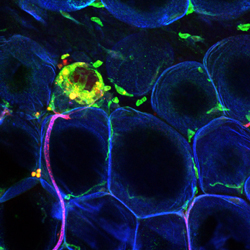 The role of proinflammatory cells in adipose tissue as a determinant of insulin resistance and altered metabolic function is now well known.
However, there is also new data suggesting that altered immune function may well be an important causal step in the accumulation of excess fat and related metabolic abnormalities.
Two studies, both in animal models, point to a role of perforin, a cytotoxic effector molecule primarily released by CD8+ T cells and natural killer (NK) cells to eliminate infected or dangerous cells via the perforin-granzyme cell death pathway. In rare cases of humans with impaired perforin-dependent cytotoxic function, one often sees excessive T-cell activation, severe hyper-inflammation and possibly death.
The first study by Xavier Revelo and colleagues from the University of Toronto, published in Diabetes, perforin-deficient mice (Prf1null), which show early increased body weight and adiposity, glucose intolerance, and insulin resistance when placed on high-fat diet (HFD) were shown to have an increased accumulation of proinflammatory IFN-γ–producing CD4+ and CD8+ T cells and M1-polarized macrophages in visceral adipose tissue.
Furthermore, transfer of CD8+ T cells from Prf1null mice into CD8-deficient mice (CD8null) resulted in worsening of metabolic parameters compared with wild-type donors, thus demonstrating a role for T-cell function in insulin resistance associated with visceral adipose tissue.
In a second independent study by Yael Zlotnikov-Klionsky and colleagues from the Weizmann Institute of Science in Rehovot, Israel, published in Immunity, showed that animals selectively lacking perforin-rich granules in their dendritic cells, progressively gained weight and exhibited features of metabolic syndrome, an effect that could be completely prevented by T cell depletion.
Both studies show that the immunoregulatory protein perforin appears to be an important regulator or body weight and metabolic function – a finding, which may well open a new door biological drivers of obesity.
Incidentally, perforin also plays a role in auto-immune diseases and this finding may thus provide a link between the common occurrence of obesity in people with auto-immune disease and has led some authors to even suggest that obesity itself may be a form of auto-immune disease.
While the therapeutic options will certainly not be as simple as replacing low levels of perforin, understanding exactly how immune function ties into the regulation of body weight may eventually lead to novel targets.
@DrSharma
Edmonton, AB
When Identical Twins Are Different

Professor Aila Rissanen, University of Helsinki, Finland
This year’s prestigious Fredrich Wassermann Award of the European Association for the Study of Obesity presented at the 22nd European Congress on Obesity goes to Helsinki’s Aila Rissanen, Europe’s grande dame of obesity research.
I have personally known Aila for as lo as I have been involved in obesity and there is much in her work and approach to obesity that has stimulated my own thoughts on this issue.
In her acceptance address, Aila chose to focus on her work in BMI-discordant twins (among the many topics she has worked on) due to the remarkable insights into the “natre-nurture” discussion that this model offers.
Indeed, it is extremely rare to find genetically identical twins, who differ in body weight (demonstarting just how highly heritable body weight actually is). Thus, body weight in identical twins is remarkably homogeneous not only because of the heritability of weight per se but also due to heritability of weight gain.
Cining the work of her wildly successful trainee Kirsi Pietilainen, Aila described the efforts it took to identify just 30 obesity discordant (weight difference of >10 Kg) identical twins from well over 500 identical twin pairs.
These discordant twin pairs have now been extensively phenotyped with every imaginable laboratory test, measurement and tissue biopsies.
The most consistent difference between the discordant twins appears to be a greater level of physical activity in the leaner twin, which appears to precede the onset of weight gain. In addition to voluntary physical exertion, there also appears to be a significant difference in fidgeting between the twins.
Compared to their co-twins, the obese twins had greater pro-inflammatory lipid profiles, lower antioxident activity and higher pro-coagulation markers. The reasons for these differences remains unclear.
Finally, Aila provided a brief overview of some of the exciting work that is now going on to further study the differences between these genetically identical but obesity disparate twins – metabolomics, lipidomics, epigenomics and even bacteriomics.
Although any of this has yet to translate to better obesity prevention or management, you never know where these fundamental insights into human biology may lead you.
For know, this is certainly a space I intend to watch.
@DrSharma
Prague, Czech Republic
Watch Dr. Sharma in the News!
Listen to Dr. Sharma!