Time To Change The Obesity Narrative
 This week, I once again presented on the need for recognising obesity as a chronic disease at the annual European Society for the Study of Obesity Collaborating Centres for Obesity (EASO-COMs) in Leipzig, Germany.
Coincidently, The Lancet this week also published a commentary (of which I am a co-author) on the urgent need to change the obesity “narrative”.
So far, the prevailing obesity “narrative” is that this is a condition largely caused by people’s lifestyle “choices” primarily pertaining to eating too much and not moving enough, and that this condition can therefore be prevented and reversed simply by getting people to make better choices, or in other words, eating less and moving more.
As pointed out in the commentary, this “narrative” flies in the face of the overwhelming evidence that obesity is a rather complex multi-factorial heterogenous disorder, where long-term success of individual or population-based “lifestyle” interventions can be characterised as rather modest (and that is being rather generous).
This is not to say that public health measures targeting food intake and activity are not important – but these measures go well beyond “personal responsibility”
” The established narrative on obesity relies on a simplistic causal model with language that generally places blame on individuals who bear sole responsibility for their obesity. This approach disregards the complex interplay between factors not within individuals’ control (eg, epigenetic, biological, psychosocial) and powerful wider environmental factors and activity by industry (eg, food availability and price, the built environment, manufacturers’ marketing, policies, culture) that underpin obesity. A siloed focus on individual responsibility leads to a failure to address these wider factors for which government policy can and should take a leading role. Potential health-systems solutions are also held back by insufficient understanding of obesity as a chronic disease and of the necessary integration across specialties.“
It is also important to recognise that the prevailing “lifestyle” narrative plays a major role in the issue of weight-bias and discrimination:
“Behind every obesity statistic are real people living with obesity. The prevailing narrative wrongly portrays people with obesity in negative terms as “guilty” of obesity through “weakness” and “lack of willpower”, succumbing to the siren call of fast and other poor food choices. This narrative leads to stigmatisation, discrimination—including in health services, employment, and education—and undermines individual agency.“
Thus, it is time to change this narrative:
“If the narrative is instead reframed around individuals at risk of or living with obesity as protagonists with agency who operate within physiological limitations and a much larger obesogenic environment over which their control is limited, then a better, more accurate story can be told.“
This new narrative must incorporate four dimensions.
“First, recognise that obesity requires multiple discrete actors and sectors to work together simultaneously through many entry points. Second, change the words and images used to portray obesity to shift blame away from individuals and towards upstream drivers. For example, photographs of anonymous or faceless people with obesity must be substituted with images of real people that foster respect and identification. Third, prioritise childhood obesity and the growing burden of obesity in low-income settings. Rights-based policy approaches that address inequalities and social and physical determinants of obesity are particularly relevant. Finally, appreciate that obesity is a chronic disease within the health system, with both its prevention and management embedded within calls for effective and comprehensive universal health coverage globally.“
Following this line of reasoning we argue that,
“Shifting to a human-focused narrative that encompasses this vulnerability and complexity will require effort and commitment across many sectors. We call on all affected by or concerned with obesity to come together with a common sense of purpose and shared accountability for building this new narrative and a more comprehensive response to obesity.“
Not discussed in this paper (largely due to space limitation), is my pet peeve, that we also need a new non-anthropometric definition of obesity – one that relies on actual health measures rather than just scales and measuring tapes. As we move to a “disease” definition of obesity, we need to ensure that we are not mis-labeling healthy individuals as “diseased” just because they happen to exceed a certain body weight, as well as the corollary, mis-labeling individuals who may stand to benefit from obesity treatments as not having obesity just because they fall below an arbitrary BMI cutoff.
@DrSharma
Leipzig, Germany
The Canadian Obesity Network Is No More – Long Live Obesity Canada!
 Over a decade ago, together with over 120 colleagues from across Canada, representing over 30 Canadian Universities and Institutions, I helped found the Canadian Obesity Network with the support of funding from the Canadian National Centres of Excellence Program.
Since then the Canadian Obesity Network has grown into a large and influential organisation, with well over 20,000 professional members and public supporters, with a significant range across Canada and beyond.
During the course of its existence, the Network has organised countless educational events for health professionals, provided training and networking opportunities to a host of young researchers and trainees, developed a suite of obesity management tools (e.g. the 5As of obesity management for adults, kids and during pregnancy), held National Obesity Summits and National Student Meetings. raised funds for obesity research, the list of achievements goes on and on.
Most importantly, the Network has taken on important new roles in public engagement, voicing the needs and concerns of Canadians living with obesity, and advocating for better access to evidence-based prevention and treatments for children and adults across Canada.
To better reflect this expanded mission and vision, the Board of Directors has decided to convert the Canadian Obesity Network into a registered health charity under the new name – Obesity Canada – Obésité Canada.
So with one sad eye, I look back and hope that the Canadian Obesity Network rests in peace – Long Live Obesity Canada!
@DrSharma
Edmonton, AB
New European Guidelines on Medical Management After Bariatric Surgery
 The European Association for the Study of Obesity (EASO) had now released the new OMTF guidelines Practical Recommendations of the Obesity Management Task Force of the European Association for the Study of Obesity for Post-Bariatric Surgery Medical Management.
The guidelines provide the latest guidance on nutritional management, micronutrient supplementation, managing co-morbidities, pharmacotherapy, psychological management, and prevention and management of weight regain. The guidelines also address the issue of post-bariatric surgery pregnancy.
Not covered are issues related to dealing with excess skin and rehabilitation (e.g. return to work, reintegration in social activities, education, etc.), both of significant importance, especially in people with severe obesity.
As the authors note,
“Bariatric surgery is in general safe and effective, but it can cause new clinical problems and it is associated with specific diagnostic, preventive and therapeutic needs. Special knowledge and skills of the clinicians are required in order to deliver appropriate and effective care to the post-bariatric patient. A post-bariatric multidisciplinary follow-up programme should be an integral part of the clinical pathway at centres delivering bariatric surgery, and it should be offered to patients requiring it”
These guidelines are now available open access in Obesity Facts.
@DrSharma
Edmonton, AB
Conflict Disclosures In Nutrition Research
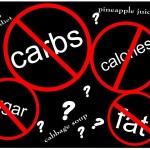 As someone who has often engaged in research projects, consultation, or speaking engagements sponsored or otherwise supported by industry (all of which I happily acknowledge and declare), I am a keen observer of the ongoing discussion about when and how researchers need to be wary of potential biases and conflicts.
As I pointed out in previous posts, among all of the potential conflicts, the financial one is perhaps the easiest to declare and otherwise manage.
A recent article by John Ionnadis and John Trepanowski, published in JAMA, discusses the wide range of conflicts (most of which may be non-financial), that one may wish to have declared and exposed, especially when it comes to nutrition research.
The authors single our nutrition research for good reasons:
“…the totality of an individual’s diet has important effects on health, most nutrients and foods individually have ambiguously tiny (or nonexistent) effects. Substantial reliance on observational data for which causal inference is notoriously difficult also limits the clarifying ability of nutrition science. When the data are not clear, opinions and conflicts of interest both financial and nonfinancial may influence research articles, editorials, guidelines, and laws. Therefore, disclosure policies are an important safeguard to help identify potential bias. “
While the potential for financial conflict in relationship to the food industry is well recognised and there are now well-established “disclosure norms”, other conflicts, of which there are many, are not routinely acknowledged, let alone, disclosed.
For one, there are significant financial conflicts that have nothing to do with taking money from industry:
“Many nutrition scientists and experts write books about their opinions and diet preferences. Given the interest of the public in this topic, books about nutrition, diets, and weight loss often appear on best-selling lists, even though most offer little to no evidence to support their frequently bold claims.”
Furthermore,
“Financial conflicts of interest can also appear in unexpected places. For example, many not-for-profit nutrition initiatives require considerable donor money to stay solvent. Public visibility through the scientific literature and its reverberation through press releases, other media coverage, and social media magnification can be critical in this regard.”
Even these financial conflicts can perhaps be dealt with through established disclosure norms.
But conflicts can get even more complicated when it starts reflecting researchers’ own personal views and biases::
“Allegiance bias and preference for favorite theories are prevalent across science and can affect any field of study. It is almost unavoidable that a scientist eventually will form some opinion that goes beyond the data, and they should. Scientists are likely to defend their work, their own discoveries, and the theories that they proposed or espoused.”
While that is certainly true for any area of research,
“Nutrition scientists are faced with an additional challenge. Every day they must make numerous choices about what to eat while not allowing those choices to affect their research. Most of them also have been exposed to various dietary norms from their family, culture, or religion. These norms can sometimes be intertwined with core values, absolutist metaphysical beliefs, or both. For instance, could an author who is strongly adherent to some religion conclude that a diet-related prescription of his or her religion is so unhealthy as not to be worthwhile?”
Moreover,
“Advocacy and activism have become larger aspects of the work done by many nutrition researchers, and also should be viewed as conflicts of interest that need to be disclosed. These endeavors often spring from some of the noblest intentions and can lead to invaluable contributions to society and public health in particular. However, advocacy and activism are also orthogonal to a key aspect of the scientific method, which is to not take sides preemptively or based on belief or partisanship. Examples of white-hat bias (bias that distorts scientific evidence in support of a perceived righteous end such as better human health) have been reported.”
The authors therefore propose that,
“…it is important for nutrition researchers to disclose their advocacy or activist work as well as their dietary preferences if any are relevant to what is presented and discussed in their articles. This is even more important for dietary preferences that are specific, circumscribed, and adhered to strongly. For example, readers should know if an author is strongly adherent to a vegan diet, the Atkins diet, a gluten-free diet, a high animal protein diet, specific brands of supplements, and so forth if these dietary choices are discussed in an article. The types of articles in which relevant disclosure should be expected include original research, reviews, and opinion pieces (such as editorials).”
As with financial disclosures,
“Such disclosure should not be seen as an admission of lack of integrity. To the contrary, disclosure strengthens the perceived integrity of the author. Moreover, some disclosures may end up being advantageous depending on future research findings. For example, if at some point strict vegan diets are shown definitively to confer unmatched health benefits, an author who previously disclosed strong adherence to that diet may receive extra recognition and acclaim for his or her prescient wisdom….Availability of these disclosures would allow readers to be either more skeptical or more inspired (depending on how they view the presented evidence and arguments).”
Although the article focuses on nutrition research, the authors acknowledge that similar biases may exist in other areas of research. In my own experience, “ideological biases” (although well-intended) are pervasive through much of the research and publications on topics ranging from physical activity to public health, where I often see strong recommendations made based on evidence that is not even remotely as robust or rigorous as the evidence that comes from, say a large randomised clinical trials of a new prescription drug.
I certainly agree with the authors’ recommendation that,
“As a general rule, if an author’s living example could be reasonably expected to influence how some readers perceive an article, disclosure should be encouraged. Authors who have strong beliefs and make highly committed choices for diet or other behaviors should not hesitate to disclose them. Doing so may help everyone understand who is promoting what and why.”
@DrSharma
Edmonton, AB
6th Canadian Obesity Student Meeting Registration Now Open
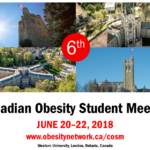 Registration and Abstract submission for the Canadian Obesity Network’s 6th biennial Canadian Obesity Student Meeting (COSM), June 20-22, London, Ontario, is now open.
As attendees of past COSMs will be well aware, this is a pretty unique meeting organised entirely by the Canadian Obesity Network’s Student and New Professional (CON-SNP) network, open to 200 MSc/PhD students, young researchers, post-docs, clinical fellows, clinical researchers and young health professionals in their last, or within five years of, completing their training.
As in previous years, we expect attendance not just from across Canada but also the US, Mexico, and overseas.
The meeting will highlight important advances in obesity research and provide important opportunities for new professionals and trainees to present findings and network with their peers.
The presentations and discussions will range from cellular and molecular biology to childhood obesity, primary intervention, and population health.
However, the primary purpose of this meeting is to enhance student growth and development with ample opportunity to network and get to know your peers.
For more information on how to submit and abstract (deadline March 5) and to register for COSM 2018 click here
@DrSharma
Edmonton, AB
Watch Dr. Sharma in the News!
Listen to Dr. Sharma!