The Health Benefits of Coriander – and Other Stories
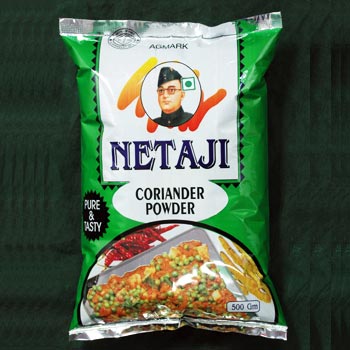 While in India, I have plenty of time to read the Indian newspapers and magazines, that have circulations Western publications can only dream of.
Not surprisingly, “health and beauty tips” are a staple feature with articles proclaiming the benefits of everything from yoga to bariatric surgery.
And of course, when it comes to traditional Indian herbs or spices, almost every ingredient is offered as a panacea.
Here, for example, are the virtues of using coriander (dhanya or cilantro), a commonly used spice and garnish (taken from a recent article in the Times of India):
– It lowers blood sugar levels
– Coriander helps in digestion; helps settle an upset stomach and prevent flatulence- Coriander shields you against the Salmonella bacteria
– Coriander being an anti- inflammatory helps in easing symptoms of arthritis
– It protects against urinary tract infections
– Coriander avoids nausea [sic]
– Coriander alleviates intestinal gas
– Coriander lowers bad cholesterol (LDL) and raises good cholesterol (HDL)
– It is a great source of dietary fibre, iron and magnesium
– Coriander is rich in phytonutrients and flavonoids
– In case of women suffering from a heavy menstrual flow, boil six grams of coriander seed or dhanya in 500 ml water, add a tbsp of sugar and consume while warm.
– Arthritis patients can boil coriander seeds in water and drink the concoction.
– Use a paste of coriander and turmeric juice treat pimples and blackheads.
– Coriander is also used in detox diet.
So there we have it – to summarize, the “super food” coriander is apparently good for the following illnesses and complaints: diabetes, dyslipidemia, indigestion, flatulence, arthritis, salmonellosis, urinary tract infections, nausea, menorrhagia, pimples, blackheads and of course “detoxification” (whatever that means).
These types of claims are of course are by no means particular to Indian media – similar articles with similar laundry lists of unsubstantiated or exaggerated claims abound in publications around the world – pandering to an audience that is happy to indulge in “magical thinking”.
Thus, according to Naturaltherapypages.co.uk, coriander also acts as a sedative, anxiolytic, anti-allergic, anti-microbial, anti-fungal, anti-cancer, analgesic, relieves hemorrhoids and venous stasis, enhances libido, relieves headaches and water retention.
For me, any one of those statements are like a nail scratching a black board (When did boards turn white?).
Take the first statement – “Coriander lowers blood sugar.”
If we assume this to be true, my first question would be, “By how much?” I would also want to know how long it takes for this “effect” to set in and how long it lasts. Should I expect a “rebound” once the effect wears off. Obviously, I’d want to know the dose-response relationship and whether there is a dose beyond which I would expect toxic effects (like long-lasting hypoglycemic shock).
I’d be curious about whether this effect is contained in the leaf, seed or root of this plant. Does it lose its effect with cooking or frying?
Then, of course I would want to know how this works – is coriander an “insulin-sensitizer” – if yes, through what mechanism? Does it work more like an AMPK activator, a PPARg agonist, or via Glut-4 transporters? Or does coriander work more as an insulin secretagogue or perhaps indirectly via the GLP-1 pathway? Perhaps coriander interferes with hepatic gluconeogenesis or even carbohydrate absorption?
As a clinician, I’d want to know whether I should be warning my diabetic patients about adjusting their diabetes meds if they chose to garnish their supper with coriander. I’d also wonder whether lower blood sugar levels would prompt an increase in appetite and thereby lead to overeating and weight gain?
But then, may be I am just too caught up in my “biomedical” thought structure – perhaps, I should just accept the “ancient wisdom” that, “Coriander lowers blood sugar” and move on…after all, coriander also helps with flatulence – which has me asking….
You get the idea.
Irrespective of any health benefits, I can certainly attest to the fact that coriander is an essential ingredient of any Indian curry – I’m happy to just leave it at that.
AMS
New Delhi, India
Does Acupuncture for Obesity Work?
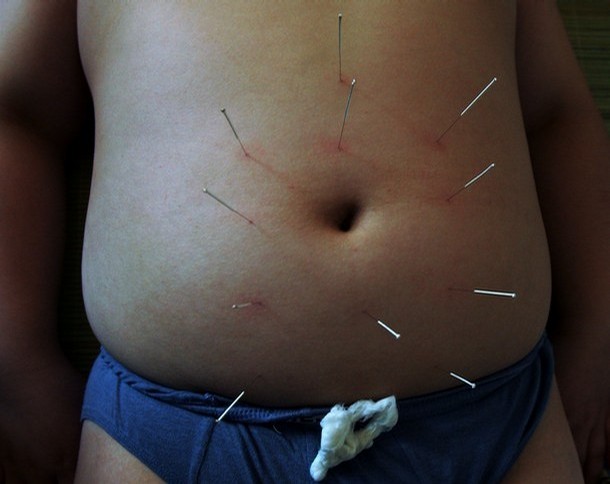 This week’s issue of Newsweek magazine, features an interesting article by Sharon Begley describing the power of placebo. The article mentions a study by Daniel Cherkin of Group Health Center for Health Studies (Seattle, WA, USA), just published in the Archives of Internal Medicine, which randomised 638 patients with lower-back pain to individualized acupuncture, standardized acupuncture, simulated acupuncture, or usual care. Ten treatments were provided over 7 weeks by experienced acupuncturists.
Remarkably, both the participants receiving real or simulated acupuncture did better than those receiving usual care.
Thus, although acupuncture was found effective for chronic low back pain, tailoring needling sites to each patient or even penetration of the skin appear to be unimportant in eliciting therapeutic benefits.
This finding suggests that the “placebo effect” of acupuncture (whether real or sham) is more powerful than conventional treatment and certainly raises doubts about the supposed mechanism of action of acupuncture. After all if the success of acupuncture for back pain has nothing to do with actually using the right points or even using real needles (tooth picks were used for some of the sham treatments), then one must wonder about how important the placebo effect of this treatment really is.
As students of obesity are well aware, acupuncture has also been suggested as a treatment for obesity. This was addressed in a randomised controlled trial just published this month in the International Journal of Obesity.
In this small but carefully conducted study, Nourshahi and colleagues from the Shahid Beheshti University, Tehran, Iran, randomised 27 obese women to 3 groups receiving diet and exercise with or without acupuncture for 8 weeks or to no intervention at all. Both diet and exercise groups lost the same amount of weight, with no indication of any additional benefit of acupuncture.
So apparently the “placebo effect” of acupuncture that works for back pain does not work for weight loss. But even if the acupuncture patients had lost more weight, in light of the back pain study, I’d be wondering about the mechanism of this effect.
Truly placebo effects never fails to intrigue me – to find out how little we know about how placebos actually work (and believe me, there is more science around this than you may suspect), I strongly recommend Begley’s article in Newsweek!
AMS,
New Orleans, LA
Eat Curry For Weight Loss?
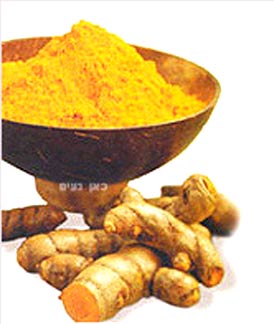 Curcumin is the principle ingredient of tumeric or “haldi” as it is called in Hindi. This is the spice that gives Indian curries their bright yellow color. The tumeric root (a relative of ginger) has long been thought to have all kinds of medicinal properties, and growing up in India, I remember my mother treating boils and abscesses on our household pets with tumeric paste. Curcumin is supposed to not only have antibiotic, antiinflammatory, antiarthritic, antioxidant and anticancer properties, regular consumption is also alleged to increase brain power.
Now, a study by Asma Ejaz and colleagues from Tufts University, Boston, MA, USA, just published in the Journal of Nutrition, suggests that curcumin may also reduce fat formation by blocking the angiogenesis (growth of new blood vessels) necessary for the expansion of adipose tissue and by positively changing fat cell metabolism.
The researchers studied the effect of curcumin both on cultured 3T3-L1 adipocytes as well as in mice fed a high-fat diet.
In cell culture studies, curcumin supressed preadipocyte differentiation, promoted adipocyte apoptosis (programmed cell death) and inhibited growth of adipokine-stimulated angiogenesis.
Consistent with these findings, in the high-fat fed mice, over 12 weeks, curcumin did not affect food intake but reduced body weight gain, adiposity, and microvessel density in adipose tissue. Curcumin also increased expression of key enzymes involved in fat oxidation. Blood cholesterol levels were also lowered by curcumin treatment.
Leaping from mouse to man, the authors speculate that dietary curcumin may not only help prevent obesity but may also have favourable effects on fat metabolism.
How much of an impact this finding may have on the obesity epidemic remains to be seen – clearly, eating a daily dose of curry (as most Indians do) is not a sure bet when it comes to preventing obesity as evidenced by the burgeoning obesity epidemic in India (but who knows, perhaps the Indian obesity epidemic would be far worse without the curry?)
In any case, I am certainly happy for any excuse to stop by my favourite Indian restaurants.
AMS
Edmonton, Alberta
Weight Loss Miracles
 Today’s edition of the Canadian Medical Association Journal (CMAJ) features an editorial co-authored by Yoni Freedhoff (of Weighty Matters fame) and myself on the largely unregulated weight-loss industry that is often heavy on promises but light on evidence.
The reason we slam the often preposterous weight-loss claims is not because Yoni and I are against commercial enterprise – both of us make a living treating patients for obesity. The reason we wrote the editorial (together with the editorial team of CMAJ), is because we believe that patients, who present with a legitimate and potentially deadly and disabling chronic disease, should receive proper medical care based on the best available scientific evidence. We feel that the delivery of this care, not unlike care for other medical conditions, is best left in the hands of licensed and regulated health professionals. When regulated health professionals themselves engage in pseudoscience, it is up to the colleges and professional bodies to step in and ensure that obesity care is delivered in an ethical and professional manner with due regard to best evidence.
Indeed, there are numerous “private” centers and practicing health professionals that offer a wide range of credible, ethical and evidence-based obesity treatments – many of these can be found among the extensive Weight Wise Community Network.
Much of the confusion about what works and what doesn’t is perhaps due to the mistaken notion that weight loss in itself is a measure of success. As I always remind my patients, it never matters how much you lose, only how much you can keep off.
Unfortunately, while most patients expect to lose (and keep off) half their weight, even surgery on average only delivers around 30% long-term weight loss.
The idea, that results rivaling or even exceeding those seen with bariatric surgery can be achieved by simply taking a “natural” product bought off a super market shelf or the internet, which promises to help you shed pounds by “cleansing” your body or “boosting” your metabolism (all with no side effects and without having to move a muscle), is simply preposterous. Believe me, if such a product existed, I’d be the first to prescribe it to my patients.
The sad reality is that there is no “magic” solution – long-term weight management requires strict control of energy balance – best achieved by careful adjustment of dietary caloric intake combined with increased activity. Yes, at times, prescription drugs, low-calorie diets, or even surgery will be necessary – but even these are not magical cures – just evidence-based treatments for the chronic medical condition called obesity.
The following is a simple consumer guide to recognizing fraudulent weight loss products:
Mistrust any product that claims to
– cause weight loss of two pounds or more a week for a month or more without dieting or exercise
– cause substantial weight loss no matter what or how you eat
– cause permanent weight loss (even when you stop using product)
– safely enable consumers to lose more than three pounds per week for more than four weeks
– cause substantial weight loss for all users
– cause substantial weight loss by wearing it on the body or rubbing it into the skin
For a comprehensive document on how to recognize fraudulent products from the US Bureau of Consumer Protection click here. You may also want to check out the add for “Fat Foe” at the head of this post.
Incidentally, the CMAJ editorial is accompanied by an article on Yoni’s remarkable private collection of “Believe it or Not”-style weight-loss treatments – these indeed need to be seen to be believed. Additional photographs of preposterous weight-loss products can be found on the CMAJ website.
I am certain that this CMAJ editorial will cause a stir in the media – will it stop people from spending their money on useless diet aids and weight-loss gizmos – hardly.
AMS
Edmonton, Alberta
Obesity in the Year of the Ox
 Happy Niu (=Ox) Year to all my Chinese Readers!
As I predicted for 2009, I do not believe that despite the global economic downturn, obesity is going to be any less of an issue in the coming year than in the past.
What better post to kick off the Chinese New Year than to report on a systematic review and meta-analysis of acupuncture for obesity released last week in the International Journal of Obesity.
In this paper, S-H Cho and colleagues from Kyung Hee University, Seoul, Korea, systematically searched 19 electronic databases, including English, Korean, Japanese and Chinese databases for randomised controlled trials (RCTs) of acupuncture for reduction of body weight or improvement in obesity.
A total of 31 studies, which comprised a total of 3013 individual cases, were reviewed, 29 of which had sufficient data to include in the meta-analysis. Despite considerable methodological limitations, overall, acupuncture compared to lifestyle alone was associated with a significant weight loss of around 1.72 kg and an around 2-fold likelihood of an improvement in obesity.
Only four RCTs reported acupuncture-related adverse events, which were minimal.
While the authors rather enthusiastically conclude that acupuncture may be an effective treatment for obesity, they do however see the need for well-planned, long-term studies.
At this time, I find the data far from convincing and wonder wether an average 3-5 lb short-term weight-loss is worth the effort (or money). Nevertheless, as with all obesity treatments there may be subgroups, who benefit more than others – unfortunately, as I do not understand how acupuncture works, I cannot even remotely predict for whom this treatment is likely to be more effective than conventional treatments.
On that rather sobering note it appears that (fitting with the Year of the Ox) there is certainly plenty of room for more perseverance and hard work, when it comes to finding complementary obesity treatments that work.
Xin Nian Kuai Le!
AMS
Edmonton, Alberta
Watch Dr. Sharma in the News!
Listen to Dr. Sharma!